


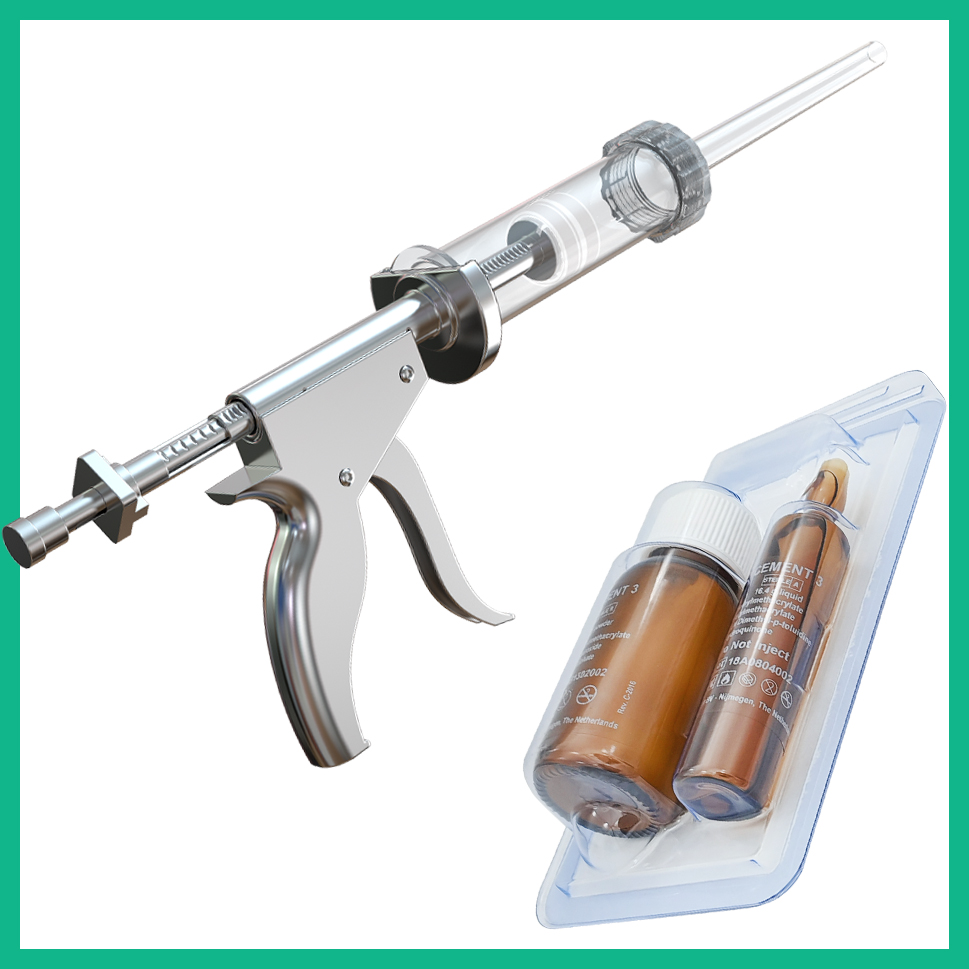
Acrylic Bone Cement Manufacturer and Supplier
Poly(methyl methacrylate) (PMMA) bone cement is a critical biomaterial in orthopedic surgery, widely used to anchor joint implants and fill bone voids, offering reliable long-term fixation.
Product Features and Benefits
- PMMA bone cement provides excellent primary fixation for orthopedic implants, including hip and knee replacements.
- Polymethyl methacrylate bone cement is engineered for high biomechanical strength and durability, ensuring stable implant positioning.
- Advanced formulations of polymethylmethacrylate bone cement may include antibiotics or bioactive additives to enhance osseointegration and reduce infection risks.
- Polymethylmethacrylate PMMA bone cement is available in various viscosities and setting times optimized for surgical convenience and rapid stability
How Does It Work?
- PMMA bone cement is supplied as a powder (PMMA) and a liquid monomer (usually methyl methacrylate); when mixed, these undergo polymerization and form a rigid, supportive matrix that bonds implants to bone surfaces.
- The mixture is applied during surgery and hardens within minutes, producing strong mechanical fixation and bridging gaps between prosthesis and bone.
Applications and Indications
- Used extensively in joint arthroplasty (hip, knee), vertebroplasty, kyphoplasty, and trauma reconstruction procedures.
- Polymethyl methacrylate bone cement is suitable for both primary and revision surgeries, supporting implant longevity and patient mobility.
Technical Innovations
- Recent innovations in PMMA bone cement include the use of nanoparticles, fibers, and bioactive glass fillers to improve mechanical properties and promote bone healing.
- Some polymethylmethacrylate bone cement formulations offer enhanced antimicrobial protection without antibiotics, utilizing graphene oxide or other advanced agents
Quality and Regulatory Assurance
- All PMMA bone cement products comply with international quality standards and regulatory guidelines for medical devices.


